
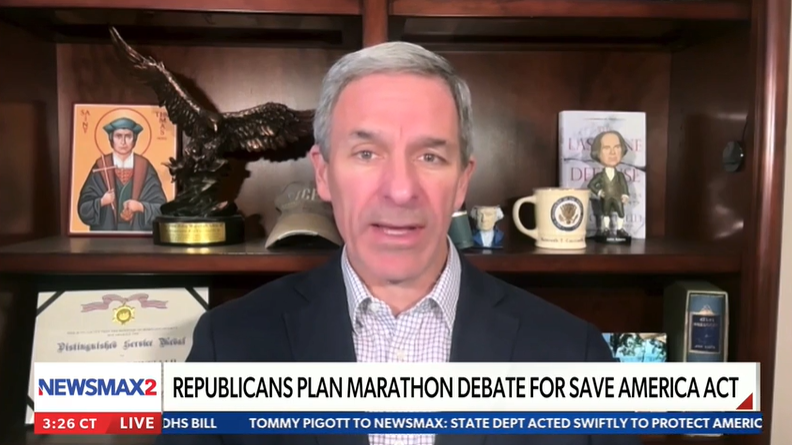
“The process may look messy, but the policy itself is straightforward.” — Ken Cuccinelli, National Chairman of ETI.
The Senate debate on the SAVE Act is continuing, but much of the confusion is procedural—not substantive. Ken is available to walk through both the process and address policy misinformation in plain terms.
FOR IMMEDIATE RELEASE
Arlington, VA — March 19, 2026 —
As the U.S. Senate continues debate on the Safeguard American Voter Eligibility (SAVE) Act, confusion has grown—not only about what the legislation does, but also about how the Senate is considering it.
Unlike most legislation, the SAVE Act reached the Senate as a privileged message from the House, allowing debate to begin with a simple majority vote rather than the typical 60-vote threshold required to invoke cloture. Since then, Majority Leader John Thune has managed the floor by filling the amendment tree and scheduling debate in stages, setting the bill aside and returning to it as needed. The stop-and-start approach has created the impression of delay, even as debate continues, without the classic “talking filibuster.”
The Senate can continue debate over time until there are enough votes to move toward a final decision—a dynamic that can be difficult to follow from the outside.
 “The Senate has a lot of rules—and not a lot of recent experience using them this way,” said Ken Cuccinelli, Chairman of the Election Transparency Initiative. “What we’re seeing isn’t a problem with the bill, it’s a lack of muscle memory with the process.”
“The Senate doesn’t do this often, and it shows,” Cuccinelli added. “The process may look messy, but the policy itself is straightforward.”
The SAVE Act requires proof of U.S. citizenship to register to vote in federal elections and establishes clear verification standards while allowing states flexibility in implementation.
As debate continues, supporters emphasize that the central question remains unchanged despite the procedural complexity.
“The process may look complicated, but the question is simple,” Cuccinelli said. “Should there be a clear, enforceable standard to ensure that only U.S. citizens are registered to vote in federal elections?”
Confusion has also been compounded by claims made during debate that are not reflected in the text of the legislation.
“There’s been a lot said about this bill that simply isn’t in it,” Cuccinelli said. “That’s part of what’s driving confusion—people are reacting to claims, not the actual text.”
With floor time being shared among multiple legislative priorities, Senate consideration of the SAVE America Act is expected to continue in stages over the coming days.
About the Election Transparency Initiative
ETI works nationwide to advance commonsense election reforms that protect the integrity of the vote and strengthen public trust in election outcomes through policies that enhance transparency, accountability, and confidence in American elections. Ken Cuccinelli serves as National Chairman of ETI. He previously served as Acting Deputy Secretary of the U.S. Department of Homeland Security and as Attorney General of Virginia.
Media Availability
ETI Chairman Ken Cuccinelli is available for interviews regarding the SAVE Act and federal election integrity reforms. Members of the media may submit interview requests at: https://electiontransparency.org/contact/
###
