FOR IMMEDIATE RELEASE: August 25, 2025
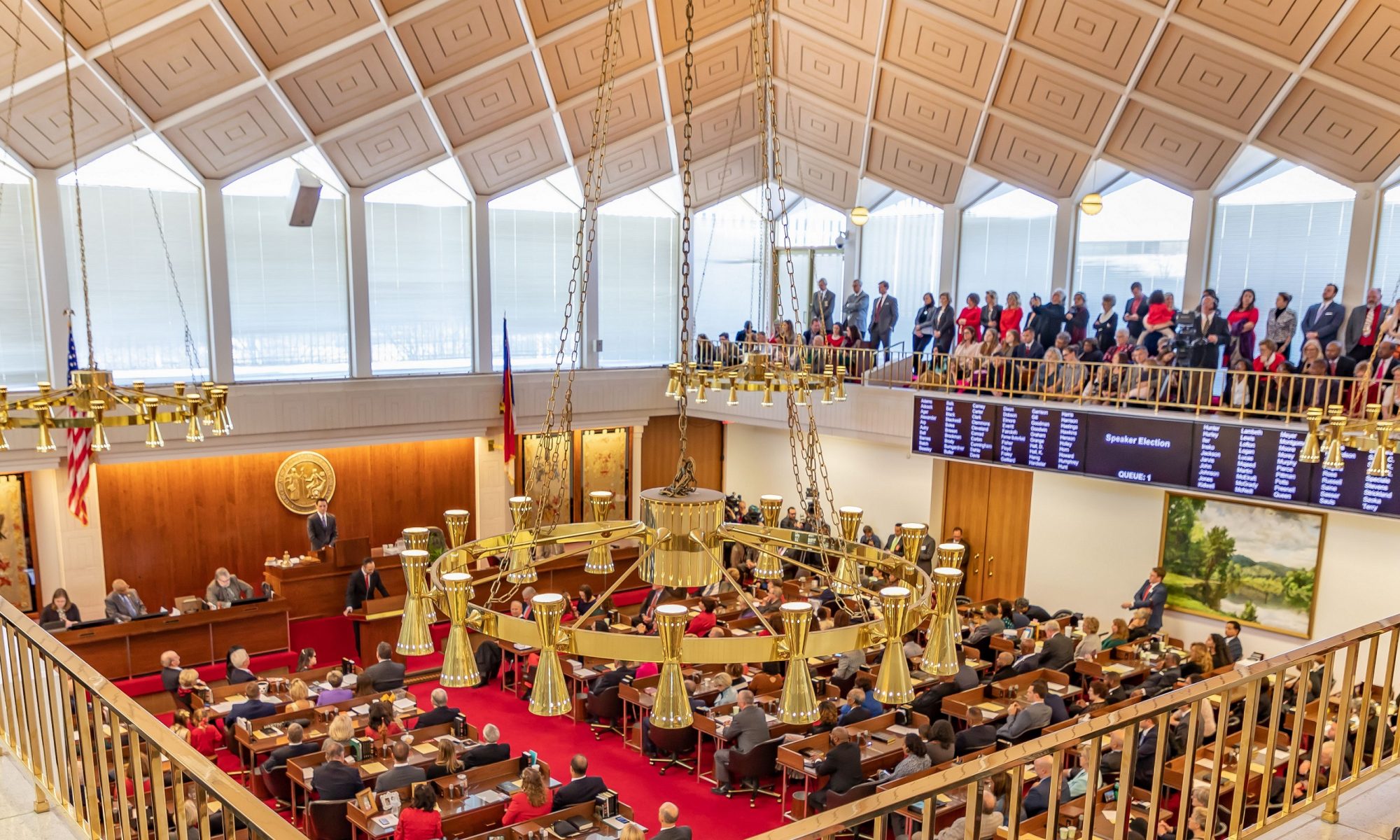
Arlington, VA – Even after being amended last month by the House Judiciary Committee, legislation intended to strengthen the integrity of North Carolina’s elections would still codify a loophole in state law long exploited by liberal special interest organizations to funnel millions of dollars to state ballot issue campaigns.
Sponsored by representatives Hugh Blackwell and Sarah Stevens, H958 awaits further consideration in House Rules Committee.
While the bill as a whole makes a number of positive improvements, such as banning the Ranked-Choice Voting scheme and establishing secure requirements for overseas ballots (UOCAVA), it inexplicably fails to adequately prohibit funds from being directed to state ballot issue campaigns by foreign nationals.
Under current state and federal law, it is illegal for foreign nationals to donate to political candidates. But state ballot issues have not been addressed, allowing foreign cash to flood North Carolina’s elections.
Since 2014, a liberal special interest organization known as the Sixteen Thirty Fund has exploited this loophole allowing them to funnel at least $130 million into states around the country—including $3.5 million in North Carolina—to buy our elections. Sixteen Thirty Fund credits Swiss billionaire Hansjorg Wyss as a top donor.
Instead of completely closing this loophole, H958 would codify it into law by permitting foreign dollars to be funneled to ballot issue campaigns via pass-through entities as well as certain corporations. The bill also lacks language providing meaningful enforcement.
National Chairman of the Election Transparency Initiative and former Virginia Attorney General Ken Cuccinelli issued the following statement:
“We applaud House Republicans for the improvements already made to H958, however its section on foreign funding still falls short. Foreign billionaires and corporations should never be given the ability—under any circumstance—to buy North Carolina’s elections and undermine voters so they can affect changes to the state’s constitution. But the reality is that the bill in its current form, without additional amendments, will allow them to continue doing so with ease.”
A growing movement of states, including Arkansas, Indiana, Kansas, Kentucky, Missouri, Ohio, Tennessee, and Wyoming, have adequately banned foreign funding from state ballot measures since 2024.
The foreign funding section contained within H958 still lacks at least 4 critical priorities to be effective:
- Does not solve the pass-through problem:
- Does not extend the foreign funding prohibition beyond the foreign national himself
- Does not include the prohibition on direct and indirect transfers
- Does not define “directly or indirectly”
- Does not extend protections against foreign funding to independent expenditures
- Does not provide for meaningful enforcement by failing to require the committee to obtain any affirmation from the donor that he is not a foreign national and has not accepted foreign funds beyond the threshold within the prescribed timeframe
- Lacks adequate protections for donor privacy
Importantly, foreign interests have bankrolled state ballot issue campaigns not only to effectuate policy outcomes, but also to increase voter turnout for liberal special interest candidates appearing on the same ballot.
“State ballot issue campaigns, while an important part of the democratic process, also allow citizens to sidestep the legislative process and place important policy issues directly on the ballot, while also driving voter turnout to impact concurrent, contested elections,” writes Americans for Public Trust. “Sixteen Thirty Fund has used this foreign-backed money to influence state and local policy on a variety of issues…”
The Election Transparency Initiative, a partnership between the American Principles Project (APP) and Susan B. Anthony (SBA) Pro-Life America, was organized to combat federal H.R. 1 and H.R. 4 legislation and advocate for state-based election reforms that voters can trust.
###
